A Conversation with Stephen Winters, Cinesite’s Director of IT, About SIGGRAPH 2026
Every year, SIGGRAPH brings together leaders in computer graphics, visual effects, animation, and production technology to explore the future of the industry.
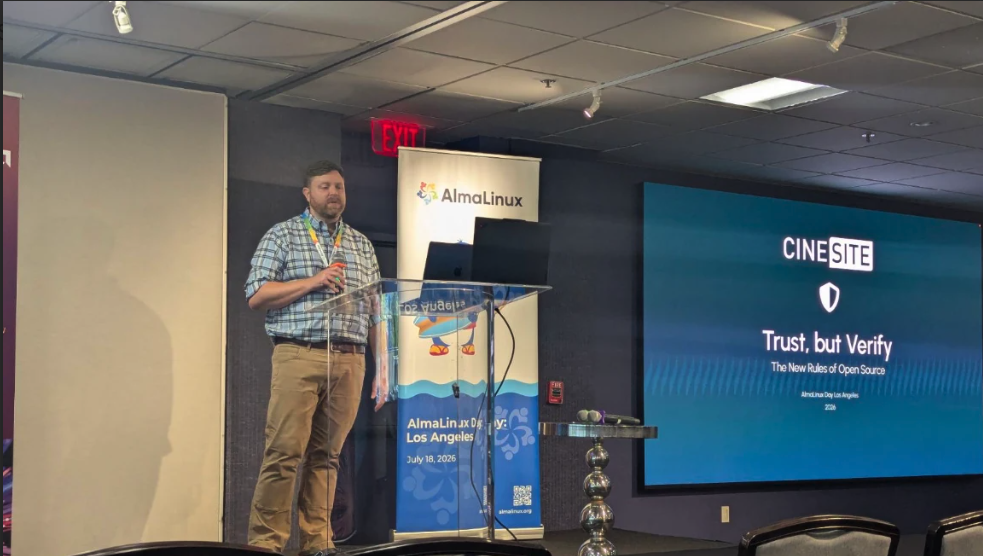
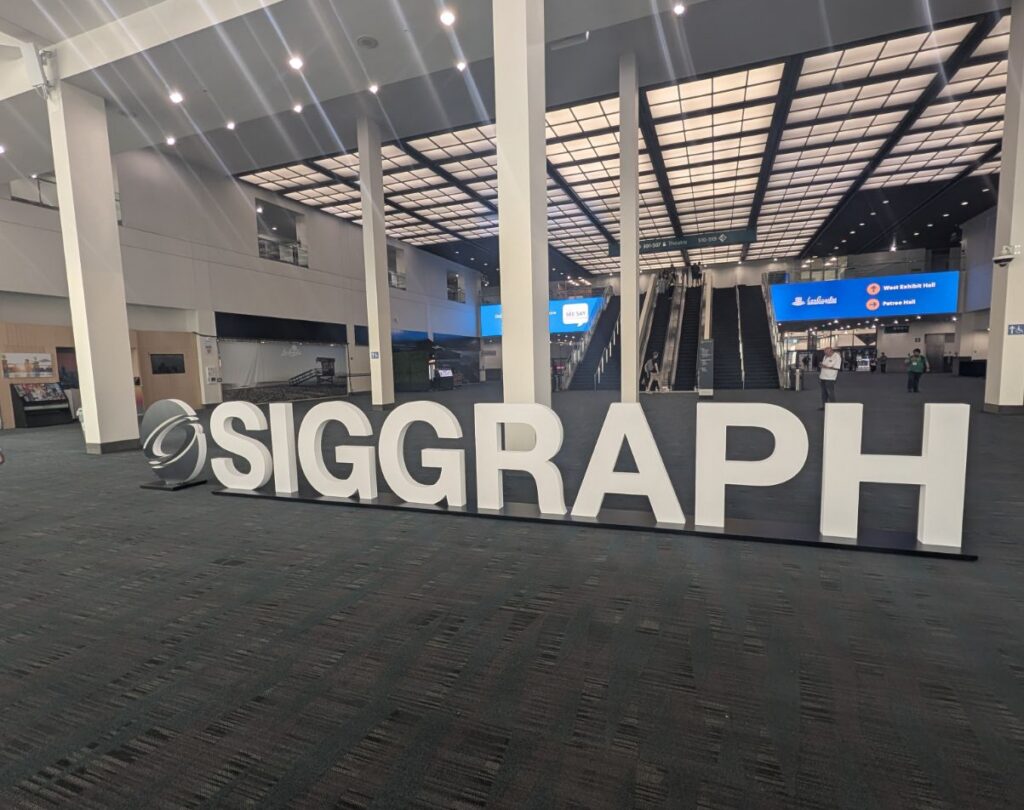
This year, Stephen Winters, Director of IT – North America at Cinesite, attended SIGGRAPH 2026 in Los Angeles, where he moderated a Birds of a Feather (BoF) session on Virtual Desktop Infrastructure (VDI) and spoke at AlmaLinux Day about AI governance and open-source technologies.
We caught up with Stephen after the conference to discuss the biggest technology trends, key takeaways, and what he’s bringing back to Cinesite.
Inside SIGGRAPH: Tech Trends, VDI, & Future-Proofing Studio Infrastructure
Q: Hi Stephen, welcome back! For readers who might not know you, could you give a quick intro to your role at Cinesite and what took you to SIGGRAPH in LA this year?
Stephen: Thanks! I’m the Director of IT for Cinesite’s North American studios.
On the IT side, heading to SIGGRAPH gives us a dual perspective. On one end, we get to see how creative teams are applying new tools and workflows on active productions. On the other, we’re looking directly at core infrastructure which is evaluating hardware, storage, global workflows and where the industry as a whole is heading.
This year was especially busy for me. I moderated a Birds of a Feather session on Virtual Desktop Infrastructure (VDI), where leaders from across the industry talked through how their studios are currently running VDI in production. I also spoke at AlmaLinux Day the Saturday right before SIGGRAPH. AlmaLinux is huge in Media & Entertainment, so my session focused on something every studio is wrestling with right now: setting up practical safety guardrails around AI, autonomous agents, and open-source tech.
Q: SIGGRAPH is always a huge event on the calendar. Why is presence and active participation at conferences like this so vital for a studio like Cinesite?
Stephen: It really comes down to getting an honest pulse on the industry. It lets us see how other studios are solving the exact same problems we run into every day.
The Birds of a Feather discussions are probably my favorite part of the conference for that exact reason. People are candid about what worked and what blew up in their face. We can take those lessons, look at their friction points, and figure out how to refine our own pipeline and infrastructure back home without repeating their mistakes.
It’s also where you catch early technical shifts. This year, for instance, everyone was talking about the move to Wayland… what that timeline looks like and how it affects our Linux distros and DCC packages. Autonomous AI agents were another constant topic. From an infrastructure standpoint, the focus wasn’t just on what AI can do, but how to wrap security and governance around it so developers can actually use it safely.
Q: Now that the dust has settled, if you had to pick three major takeaways or recurring themes from this year’s conference, what would they be?
Stephen: First, the shift to AlmaLinux is very real. Seeing its footprint at both AlmaLinux Day and SIGGRAPH proved we made the right call early on with moving in that direction. As studios migrate away from legacy distros like CentOS or current distros like Rocky Linux, AlmaLinux is becoming the preferred option, and the community behind it is incredibly active and supportive.
Second, AI conversations have matured. Nobody is just talking about cool demos anymore. The focus has shifted to implementation details: where it fits in a studio pipeline, how it’s executed, and how to build strict guardrails around it. That conversation is only going to grow over the next few years.
Third, hardware and remote access are evolving fast. A few specific developments caught my eye:
- New GPU options: I spent some time with the executive team at Bolt Graphics. They’re an emerging startup building price-conscious, path-tracing GPUs specifically as an alternative to NVIDIA and AMD. Given where hardware prices are going, that’s worth keeping an eye on.
- Global namespaces: Studios are pushing heavily toward global namespace architectures. I was again encouraged to see this as an area where Cinesite has already been investing in heavily (and in many ways ahead of most studios).
- Remote protocol shifts: With HP Anyware sunsetting in favor of HP Z Remote Graphics Software (RGS), studios are scrambling to figure out their next remote desktop move, making protocol evaluation a priority again.
Q: Out of everything you saw, heard, or discussed in LA, what are you most excited to bring back and share with the rest of the Cinesite team?
Stephen: I’m really looking forward to benchmarking Amazon DCV (formerly NICE DCV). With HP Anyware sunsetting, everyone is looking for solid remoting alternatives, and DCV was a major topic on the floor. It works across both cloud and on-prem environments, and early reports from other studios have been really strong.
I’m also keen to test out hardware from Bolt Graphics. Enterprise GPUs are getting ridiculously expensive, so if there’s a vendor offering solid path-tracing performance at a lower price point alongside NVIDIA and AMD, we owe it to ourselves to test it. We’re hoping to test the hardware in coming months and see how it performs under real production loads.
Q: Finally, for anyone in the community who hasn’t been to a Birds of a Feather session before, what makes that format so special?
Stephen: Most SIGGRAPH events are one-way presentations. You sit in an auditorium while a team explains how they made a movie, a researcher walks through a whitepaper, or an instructor leads a lab.
Birds of a Feather is the opposite. It’s an open room where peers and industry experts sit down and actually talk shop.
Because the topics aren’t tied to specific movie IP or confidential project details, people speak pretty freely. You end up making great connections and getting a realistic look at how other studios… big, medium, and small are handling their tech stack. If you want to know where studio technology actually stands today versus where marketing decks claim it is, BoF sessions are the place to be.
Learn more about Stephen Winters and his work at Cinesite here.