
Redefining the Experiential Gallery
FRAMELESS is the UK’s largest immersive art experience, designed to invite people to FEEL MORE from the masterpieces features in its galleries. As the official production partner for FRAMELESS, Cinesite’s immersive team works under the supervision of FRAMELESS Creative Director, Ryan Atwood, on the visual aspects of the Experience, to ensure the integrity of the original masterpieces is respected and preserved. This partnership presents a unique technical and artistic challenge: building entire cinematic worlds that remain faithful to the artists’ original brushstrokes and intent, all the while ensuring the 360-degree projection feels both comfortable and awe-inspiring for a moving audience.
“Working with Cinesite gives us the opportunity to take FRAMELESS London to the next level, working with world-class masters of effects and plugging them into our space. This process has been about exploring how we can harness the film experience of the team to enhance our overall visual storytelling capabilities and the level of detail and effects in the artworks, really investing in the emotional connection our visitors can have with the work. The results are spectacular and this is just the start of what is an extremely exciting phase for FRAMELESS, enabling us to take Hollywood style effects into the world of art.”
– Richard Relton, Frameless Creative CEO
The World Around Us
In the largest gallery at Frameless, Cinesite focused on the overwhelming power of the natural world, utilising high-end fluid simulations, Digital Matte Painting (DMP), and complex CG environments.
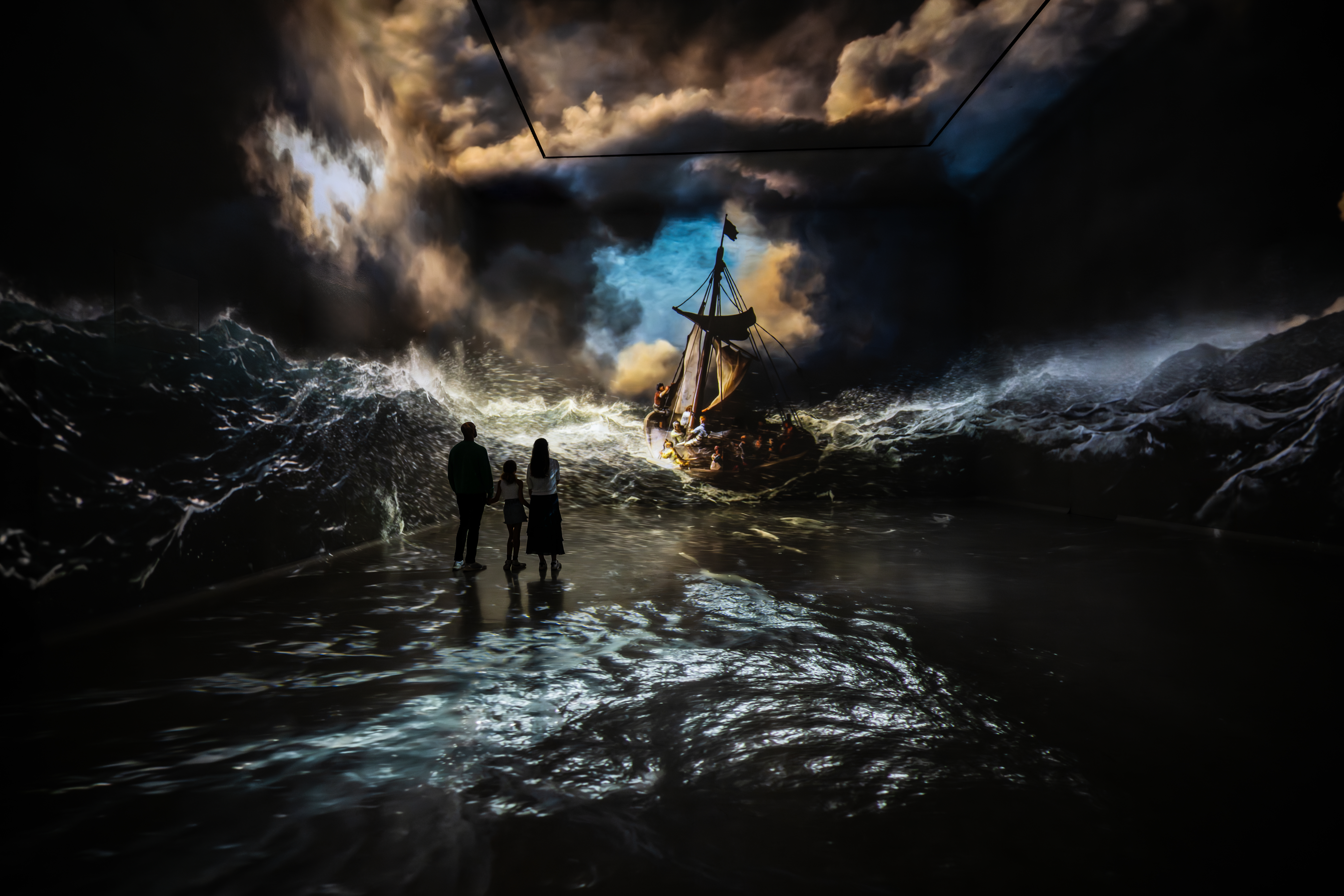
Award-Winning Mastery: Rembrandt’s Storm on the Sea of Galilee One of the most technically ambitious pieces in the gallery, FRAMELESS and Cinesite’s work on this Rembrandt masterpiece has been recognised with some of the industry’s highest honours, including a prestigious VES Award, as well as BIMA and Silver Arrow award. The Cinesite team utilised sophisticated fluid simulations to bring the crashing waves to life, placing the viewer at the heart of the biblical tempest. The success of this piece underscored Cinesite’s ability to translate the dramatic lighting and texture of a Dutch Master into a cinematic, three-dimensional experience.
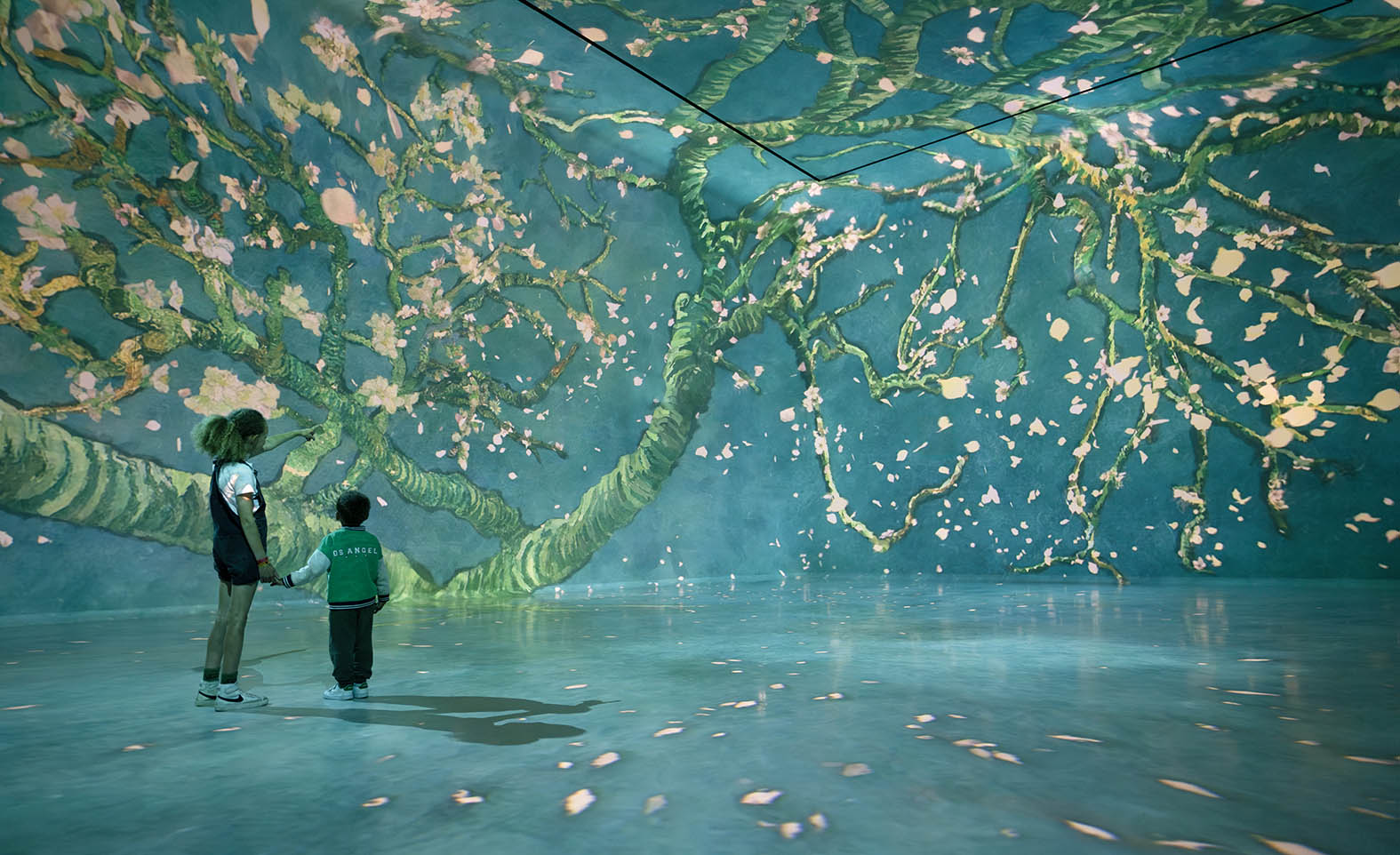
 Van Gogh: The Starry Night & Almond Blossoms For The Starry Night, the team integrated Van Gogh’s Olive Trees series, meticulously grading the daylight paintings to match the nocturnal palette of the hero work. Swirling clouds were animated to represent the artist’s troubled mental state, giving the paint a physical, churning sense of movement. In contrast, the Almond Blossom piece offers a serene moment of reflection. The team used DMP to extend the branches seamlessly, placing the visitor inside the tree as a gentle CG breeze dislodges the blossom, causing it to swirl and settle on the gallery floor.

The team pushed the boundaries of immersive storytelling by bridging the gap between ancient ritual and natural catastrophe. Moving beyond the initial scope of 2D animation, the Villa of Mysteries frescoes were reimagined as a fully realised 3D environment. To achieve this, the team meticulously modelled, textured, and rigged 29 individual characters, removing centuries of patina and cracks to restore the vibrant “Pompeian Red” before layering the history back on top. This piece stands unique as the only experience where the audience follows a singular narrative thread; a “spotlight” guides visitors around the room, following a character as she comes to life and walks through the villa’s various stages of a Dionysian initiation.
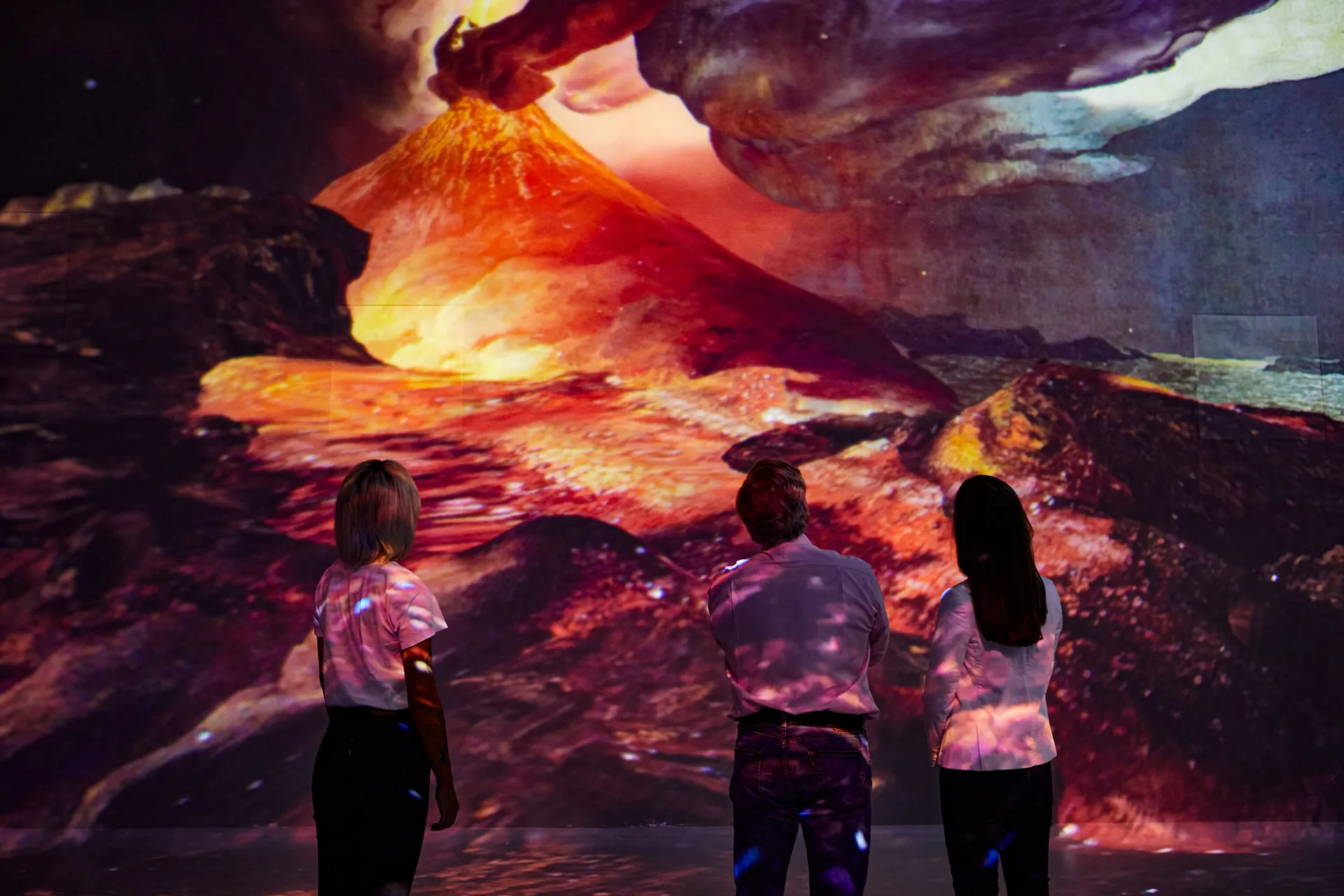
The narrative climax is defined by a seamless, destructive transition into Joseph Wright of Derby’s Vesuvius in Eruption. As the volcano begins its ascent in the following piece, the 3D mosaic environment of the villa begins to crack and erode in real-time. The architectural stability of the Roman room literalises the impending disaster, with the walls and vaulted ceilings sustaining heavy damage before falling away to reveal the moonlit Bay of Naples. By projecting this shift across both walls and floor, the team created a visceral “the floor is lava” sensation, surrounding visitors with exploding molten light and surging lava. This transition illustrates the fragility of humanity.
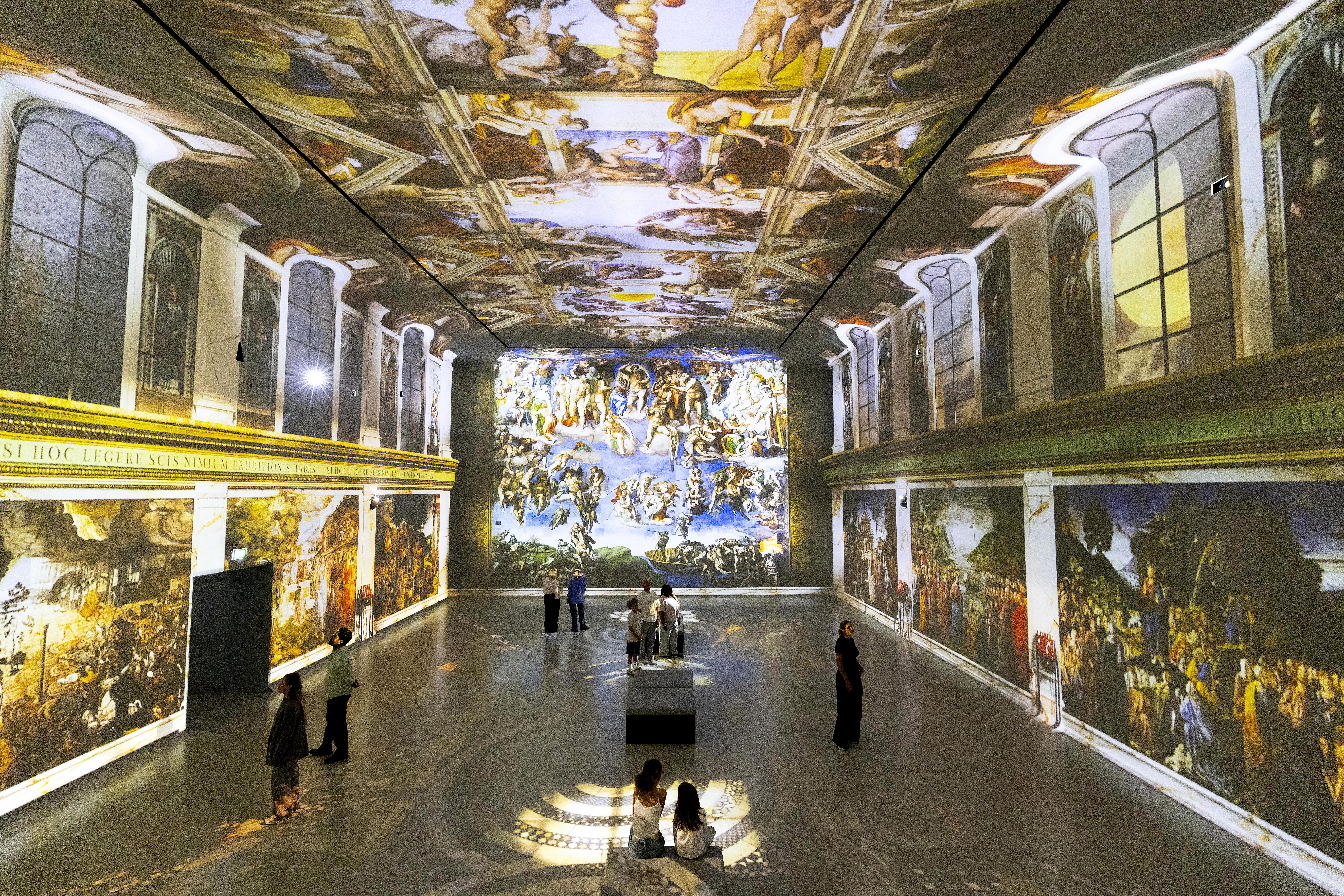
The latest addition to The World Around Us is an interpretation of Michelangelo’s iconic Sistine Chapel masterpiece, reimagined into a cinematic, 3-minute sequence. Working as part of the wider project team, under the direction of FRAMELESS’ Creative Director Ryan ‘Woody’ Atwood, we began by selecting the most emotionally impactful stories to bring the historic frescoes to life. These were then mapped out using a 3D model of the gallery space with composited imagery. Spatial adaptation was a significant challenge with this artwork, so the immersive team experimented with proportions to create a powerful illusion of depth, making the ceiling feel soaring and expansive from any viewpoint. Animated digital characters were integrated seamlessly alongside the chapel’s architectural elements, and sharp-eyed visitors might even spot a digital cameo of Michelangelo himself, hard at work painting the chapel.
Beyond Reality
For the Surrealist and Symbolist works, the team shifted focus to high-end creature animation and cloth dynamics. One of the most significant triumphs was Salvador Dalí’s The Elephants. Rigging these characters required a delicate balance between the immense weight of the elephant and the “mosquito-like” fragility of the legs. In a clever bit of spatial design, the team programmed the sand and floor elements to flow around the gallery’s physical pillars, turning a structural obstacle into a fluid part of the digital environment.

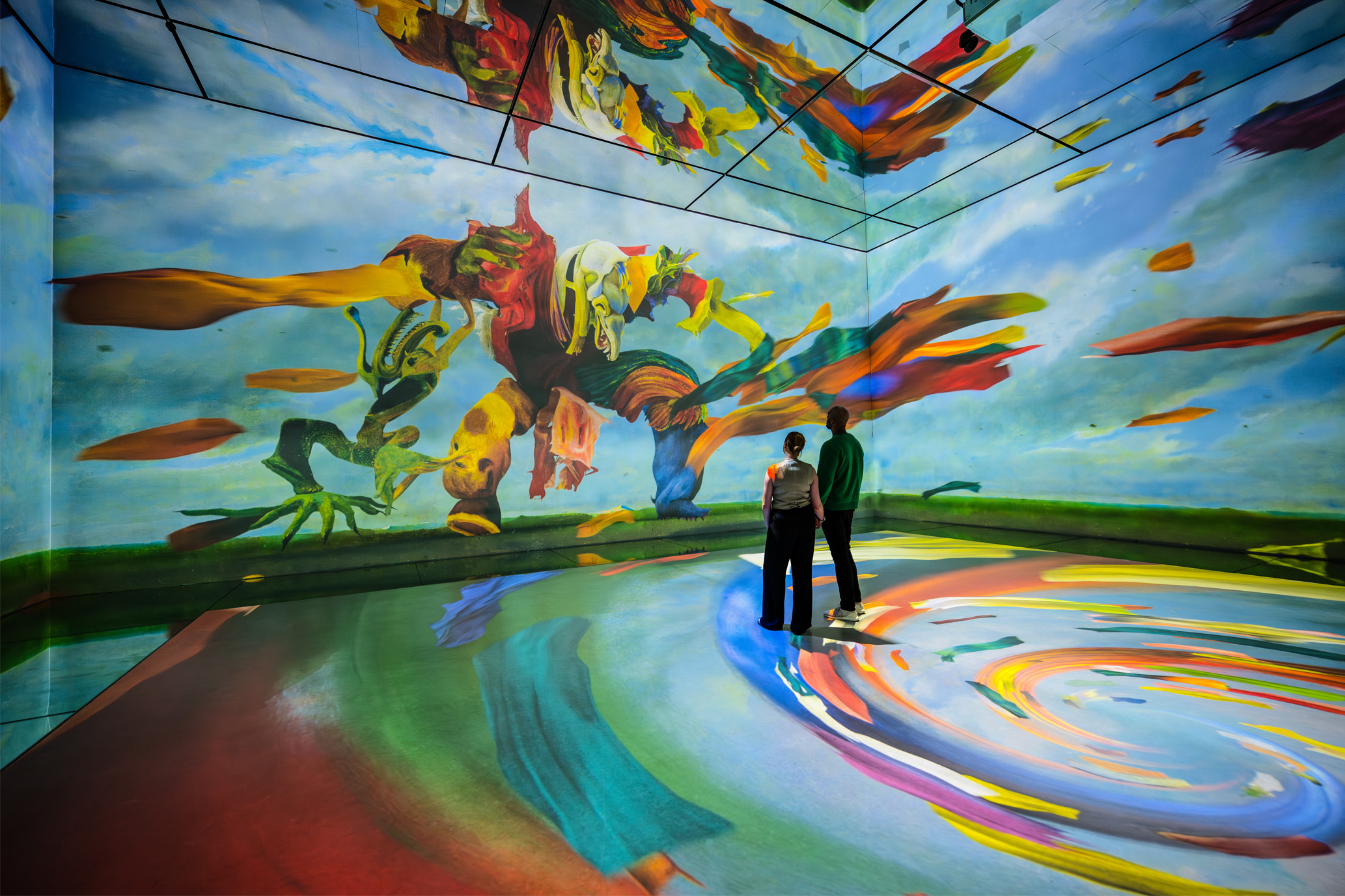
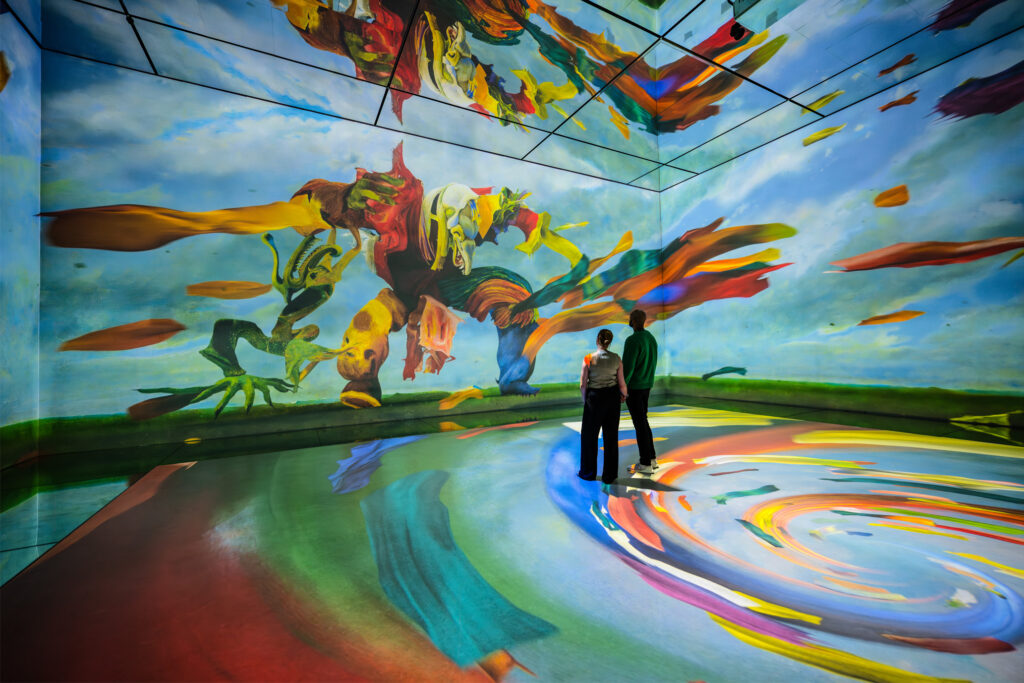
The animation for Max Ernst’s The Fireside Angel took inspiration from the tension of the Spanish Civil War, utilising a staccato movement style based on Tango, Flamenco, and martial arts. The “Angel” itself was a complex CFX (Character FX) achievement; the creature was modelled as a series of fabric elements that utilised cloth simulations to fall apart and reform seamlessly across different walls as it jumped between screens.
The scale and artistic fidelity of the visuals of the Frameless works were made possible by a specialised Immersive team at Cinesite. The division is overseen by Chris Fitzpatrick, who leads the strategic growth and execution of the immersive department, alongside Madeleine Scott-Spencer (Creative Director, Immersive), who oversaw the central creative vision for the artworks under the direction of the Frameless Creative Director Ryan “Woody” Atwood.
IMMERSIVE TEAM




READY TO START IMAGINING?
If you have an immersive project or experiential gallery space that requires world-class visual effects and storytelling, we would love to help bring your vision to life.
GET IN TOUCH