
There is a specific kind of pressure that comes with animating a masterpiece; how do you translate one of the 20th century’s most famous literary satires into the digital realm? In this case study, we will dive into the collaborative process between director Andy Serkis and Cinesite, to turn the legendary novella into an animated film for a new generation of audiences.
Animal Farm is based upon George Orwell’s classic allegorical tale of the Russian Revolution, and Stalin’s rise to power, told in a fairytale format. The story takes place on a farm where the animals revolt against their farmer for their own freedom, only to have their plan slyly spoiled by one of their own. It’s a tale of totalitarianism which is just as relevant today as when it was first published in 1945.
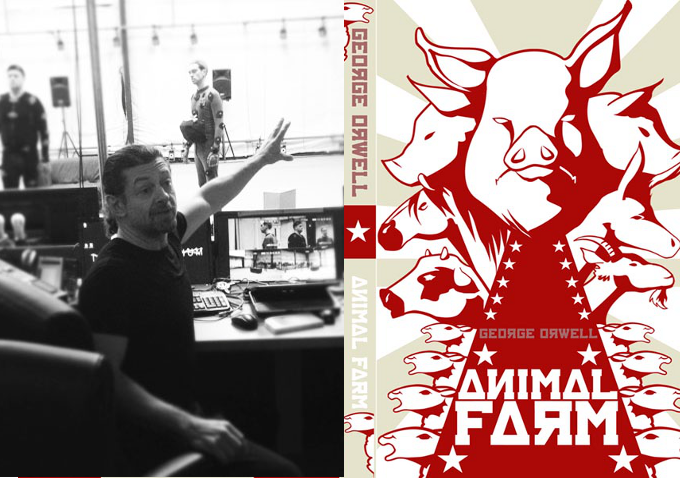
BAFTA and Emmy award-winning actor and director Andy Serkis says of Animal Farm, “It is one of the first books I read as a young adult, at around 12 or 13. I remember it vividly and understood that there were layers beneath the fable on top. I found it very powerful and moving.”
Although an experienced and talented director of productions including Mowgli: Legend of the Jungle and Venom: Let There Be Carnage, this would be his first animated film with Imaginarium Productions & Aniventure. To bring it to life, he turned to Cinesite’s experienced team to make it with him.
A Cinematic Storybook
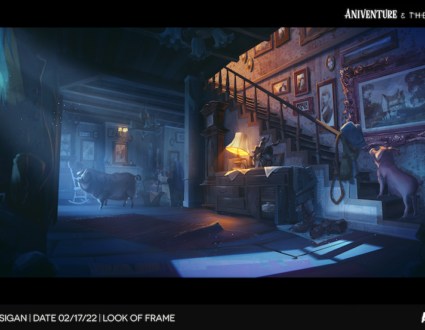
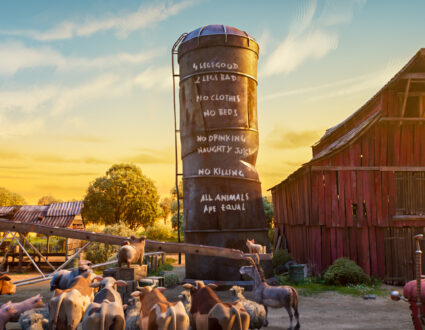
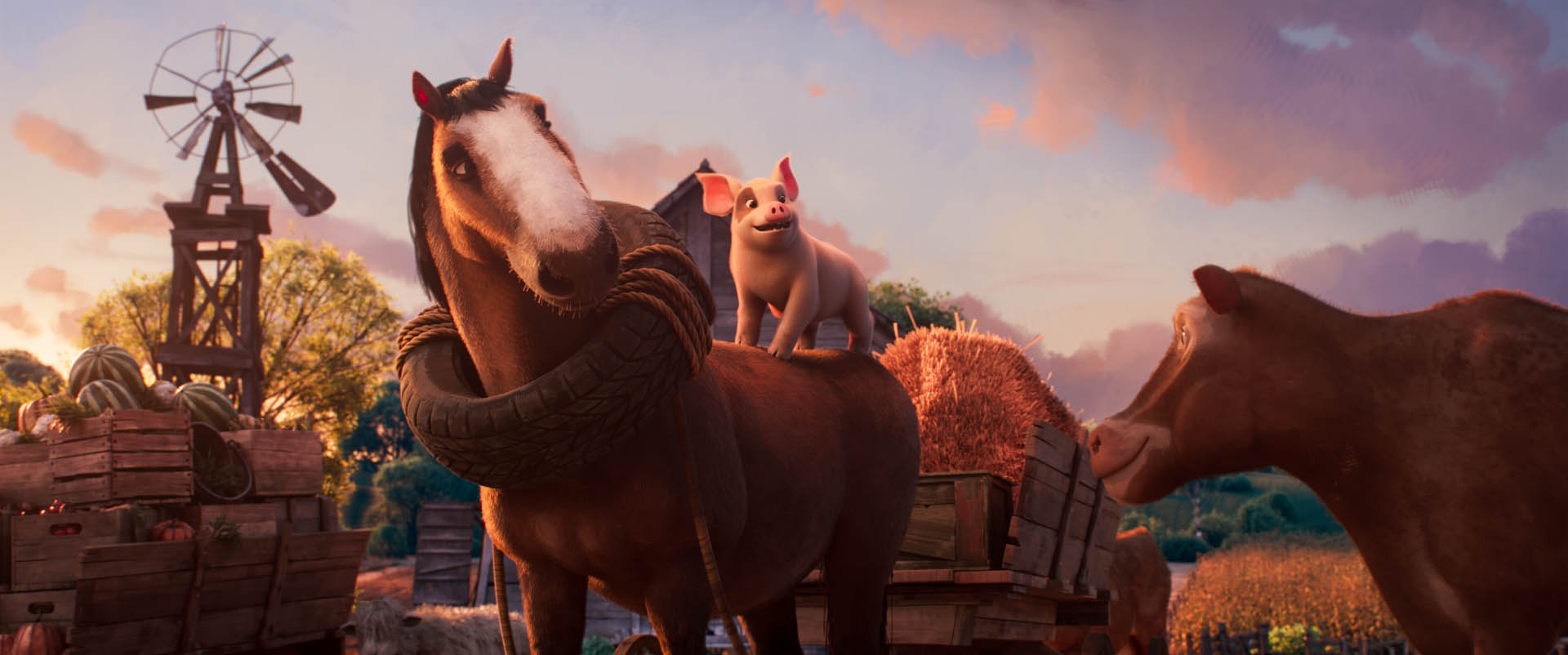
Working closely together, one of the first tasks was to establish a look for Animal Farm. Many CG movies lean towards either pure animation or photorealism, but the aim here was to create a blend of both. A concise moniker was needed for the visual approach and the term, “A Cinematic Storybook” was created, aptly describing what we were aiming to achieve.
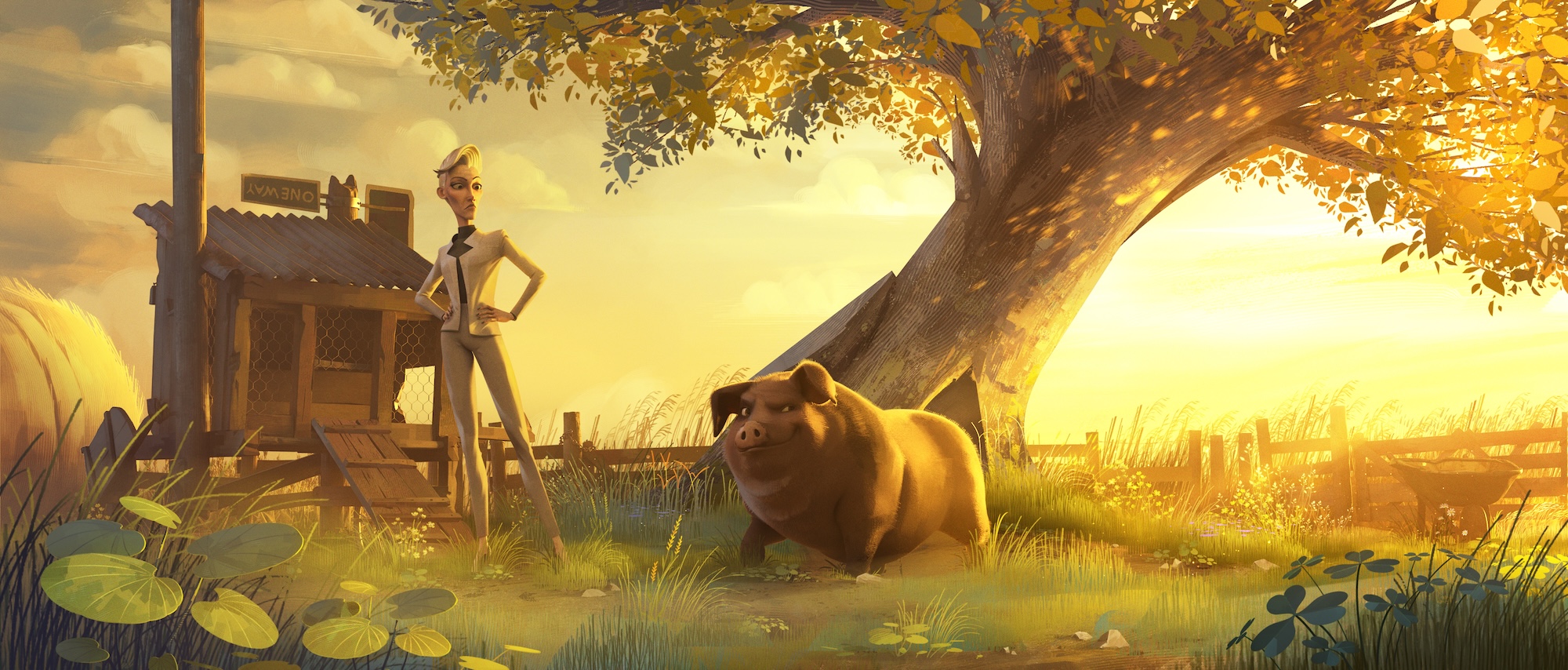
Associate Director, CG, Alex Parkinson explains, “Andy really liked the look of hand-painted assets and environments, with a kind of homemade feel, because it leant into a sense of the film being like a storybook – Orwell himself referred to Animal Farm as a fairy tale.
Andy is also a fan of real cinematography; camera moves and lighting grounded in the real world. Aligning both of those approaches to create a story with fantastical elements which is grounded in the real world, was at the heart of what we set out to achieve. The “Cinematic Storybook” was something we came back to throughout production, and it served as a kind of anchor for the creative direction.”
Reference was gathered from live action movies for a range of cinematography and lighting styles rooted in analogue technology, capturing images with realistic lens distortions from a pre-digital era where film responded to light in characteristic ways.
Cinesite’s lighting team played with shadows, utilised depth of field and incorporated elements like darkness as though Animal Farm had been captured on film. Camera setups mimicked what might be captured in live action; although not real, we were committed to always achieving authenticity.
Naturalism vs. Artificiality
Head of Lighting Christopher Springfield explains, “We lit every shot as though it had been captured on film. As part of our cinematography setup, we developed two contrasting themes: naturalism versus artificiality. For naturalism, we drew inspiration from films like The Natural, A Hidden Life, Days of Heaven and The Revenant, which capture the essence of different seasons.”
Without electricity in the farmyard scenes, only the sun could be used for lighting. Showing the animals suffused with warm, soft sunlight, captured with subtle, spontaneous-feeling camera movements, represented reality and truth.
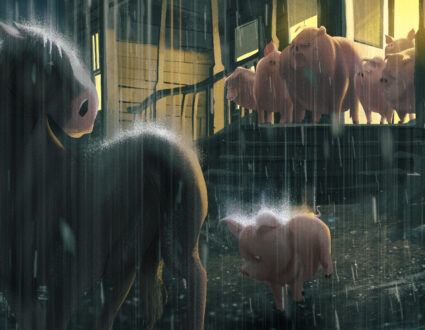
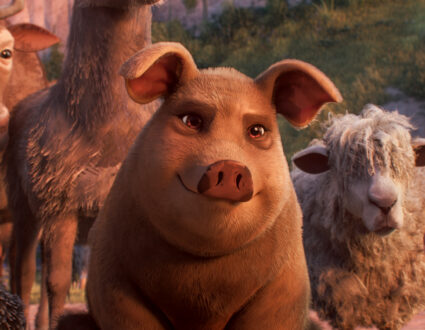
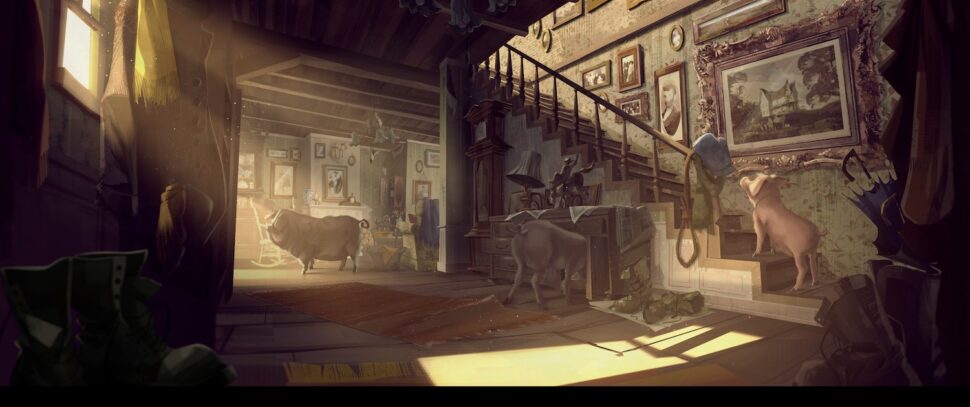
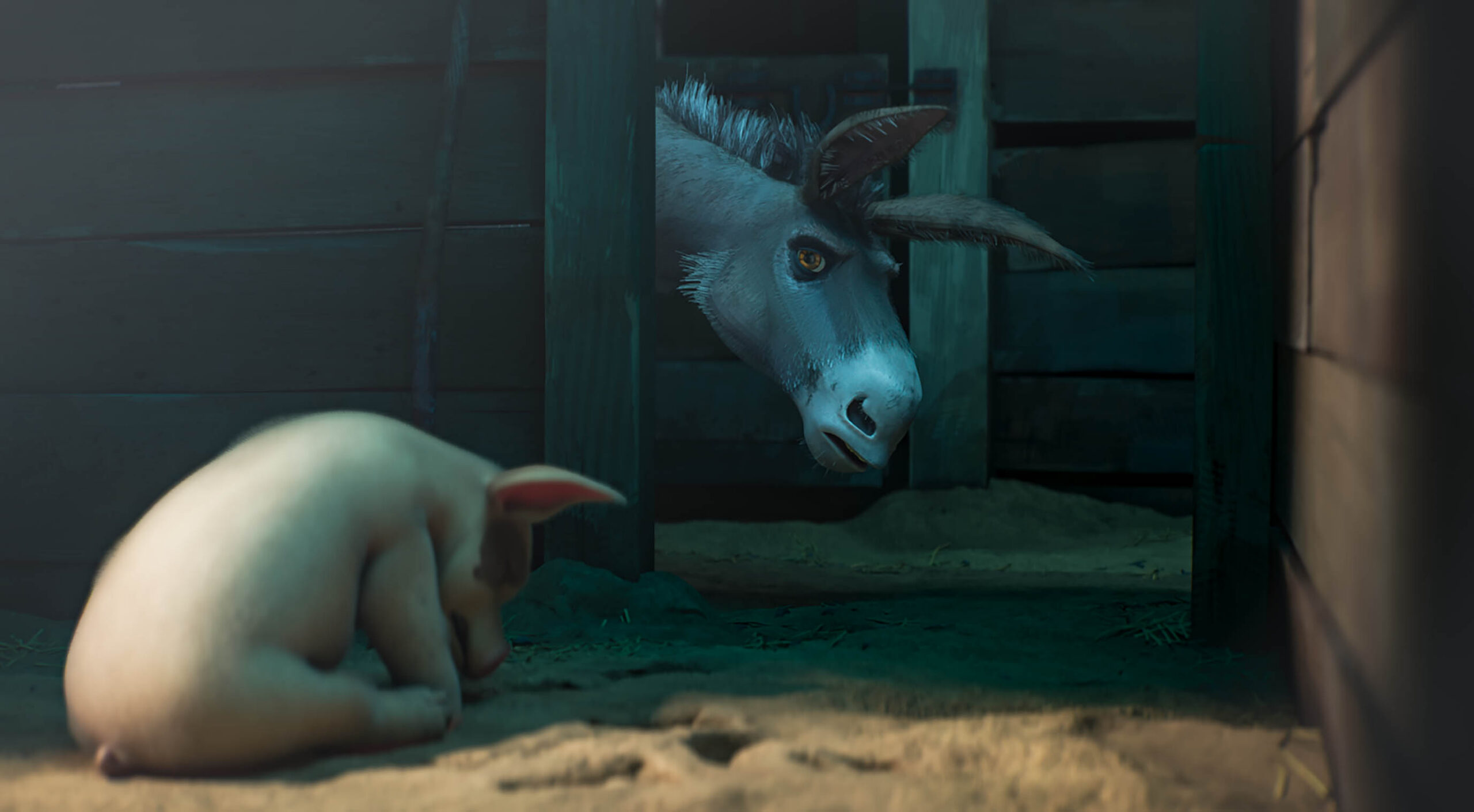
Darkness was used just as carefully as light. Realistic exposure levels were set to create contrast. When something was in shadow it was lit appropriately – highlights could be overexposed, with shadows remaining very dark. Classic three-point and Rembrandt lighting was used for the hero characters, typical of live-action films. In one sequence where Lucky hides in a stable, having been chased out of the farmhouse by the other pigs, his despair is reflected by the darkness of the scene, without moonlight or stars, there are ominous searchlights and fog; the muted lighting adds to the general air of tension. This sequence drew visual inspiration from the powerful end sequence from Francis Ford Coppola’s Apocalypse Now, where Kurtz (Brando) has secluded himself from the rest of the world.
 Serkis notes, “For the farmyard, we chose a particular, painterly look, which harked back to old Technicolor film stock. Lighting was a hugely important part of getting the tone right for the movie. We wanted the lighting and seasonal changes to feel natural, with the farm originally feeling like a warm and inviting place, before later in the movie it becomes darker and more threatening. As the pigs start to trade with the humans and the humans interfere more with the Farm, it becomes a more artificially lit environment.”
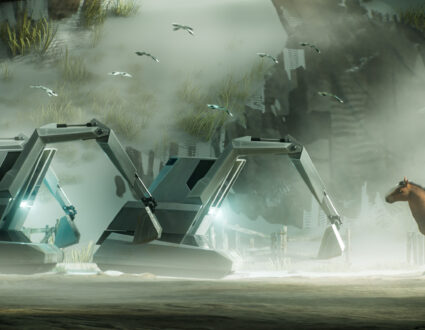
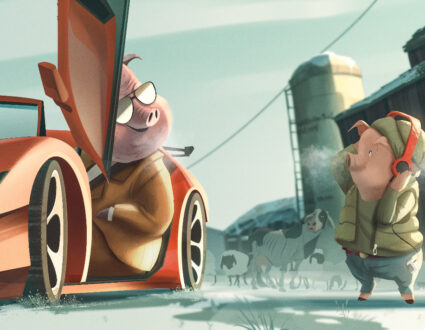
The more synthetic, man-made modern environments in Animal Farm are portrayed with harsh lighting and smooth, precise camera work. Truth is associated with nature and the organic world, while deception is associated with the new, the unnatural, the manufactured and corrupt. There is a clear transition between the two themes throughout the film, in support of the narrative.
For the artificiality theme, Neon Demon was referenced for its use of artificial lighting, La La Land for its theatrical style and Blade Runner for its classic cinematography. John Wick was also referenced, for its use of contrasting colours.
Colour was an important visual device, used to communicate mood change and the evolution of important themes.
Animal Farm spans all four seasons, opening with the clean yellows and undefined clouds of Spring, before the emergence of Summer’s green hues, blue skies and fluffy clouds. As characters become corrupted and the story darkens, we move into Fall; its traditional seasonal oranges and reds have been pushed towards purples, magentas and pinks. Blue shifts towards cyan, the colours becoming increasingly skewed.
Production Designer Amos Sussigan says, “Towards the end of the film, as it turns to Winter, the colour is always just a little bit off. Rather than making the snow a clean white with blue tones, as one might expect, we skewed it towards green and yellow tones to subtly illustrate the increasing corruption of the characters. We used this approach to colour throughout the film, which worked hand in hand with the approach to lighting and camera.”
Bringing Performances To Life
In the world of Animal Farm, what isn’t said is often more important than what is.
Serkis articulates that, “In this film I wanted something very specific, stylistically. I was keen to express the internalisation of the characters’ emotions without pantomiming or expressing overtly outwardly; to really play each close-up. There is a huge amount of subtext [in Animal Farm] which is very important to show in the characterisations.”
Nailing every performance was fundamentally important in capturing the emotional impact of the novella.
The animators recorded themselves delivering performance ideas, which were shown to director Andy Serkis before the animation began. He brought an invaluable sensibility to the animation – an actor’s perspective. Connecting with the emotion of every scene, his insights, clearly and sensitively communicated directly to the animators creating the performances, helped elevate every character.
The actors’ voice performances also informed the physical performances created by the animators, which were used as the starting point for the animation. The animators carefully interpreted the emotional inflections from the voices, to convey physical and emotional intent. In early character and animation tests for Napoleon, voiced by Seth Rogan, the actor’s lines from other films were used to hone expression and character with dialogue more closely aligned with the character. This ensured that Napoleon always felt like Rogan, using his movements and expressions, from the earliest stages of development.
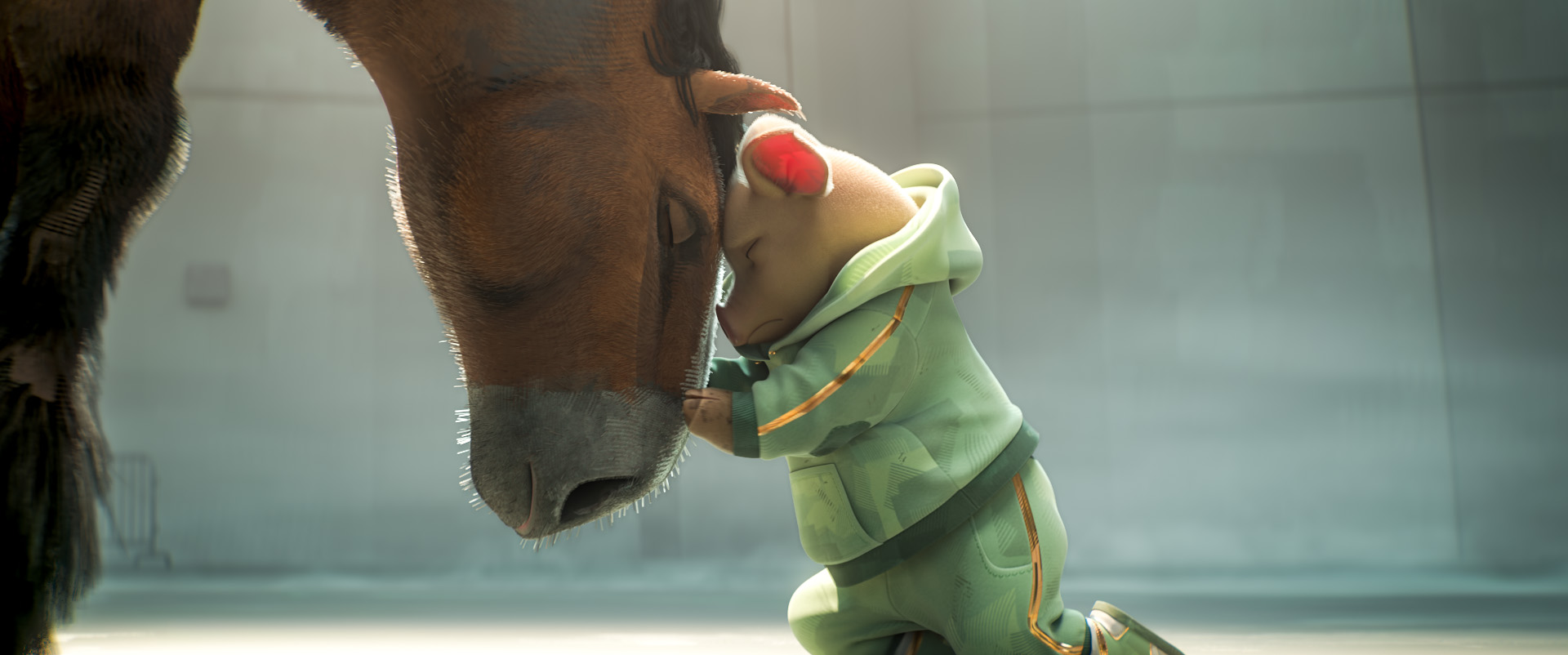
Woody Harrelson’s voice and sympathetic characterisation was a perfect fit for the character of Boxer, whose death is one of the most poignant moments in the book. A gentle soul and tireless worker, he is ultimately betrayed by the pigs, after he has collapsed through over-work; sold to a glue factory instead of honouring their promise to retire him. The moment when Lucky and Boxer gently touch heads before he is lifted away by a helicopter is one of the most tender and poignant in the film. The animals’ subtle, emotional performances leave a lasting impression on the audience.
Four legs good, two legs bad
From an early stage of development, the stylistic decision was made that the characters should always feel like real animals, first and foremost. Serkis wanted them to be anatomically correct – animals who could perform, rather than performing animals. They needed to be believable, with a convincing sense of weight, physics and anatomy.
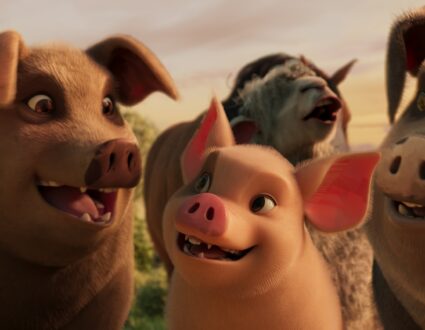
Whilst anatomical correctness was largely maintained, faces needed to be adjusted so that the animals could convey emotion in a relatable way. Eye size and position was accentuated to enhance expressiveness, while preserving anatomical principles i.e. carnivores’ eyes would always be forward facing and herbivores to the side.
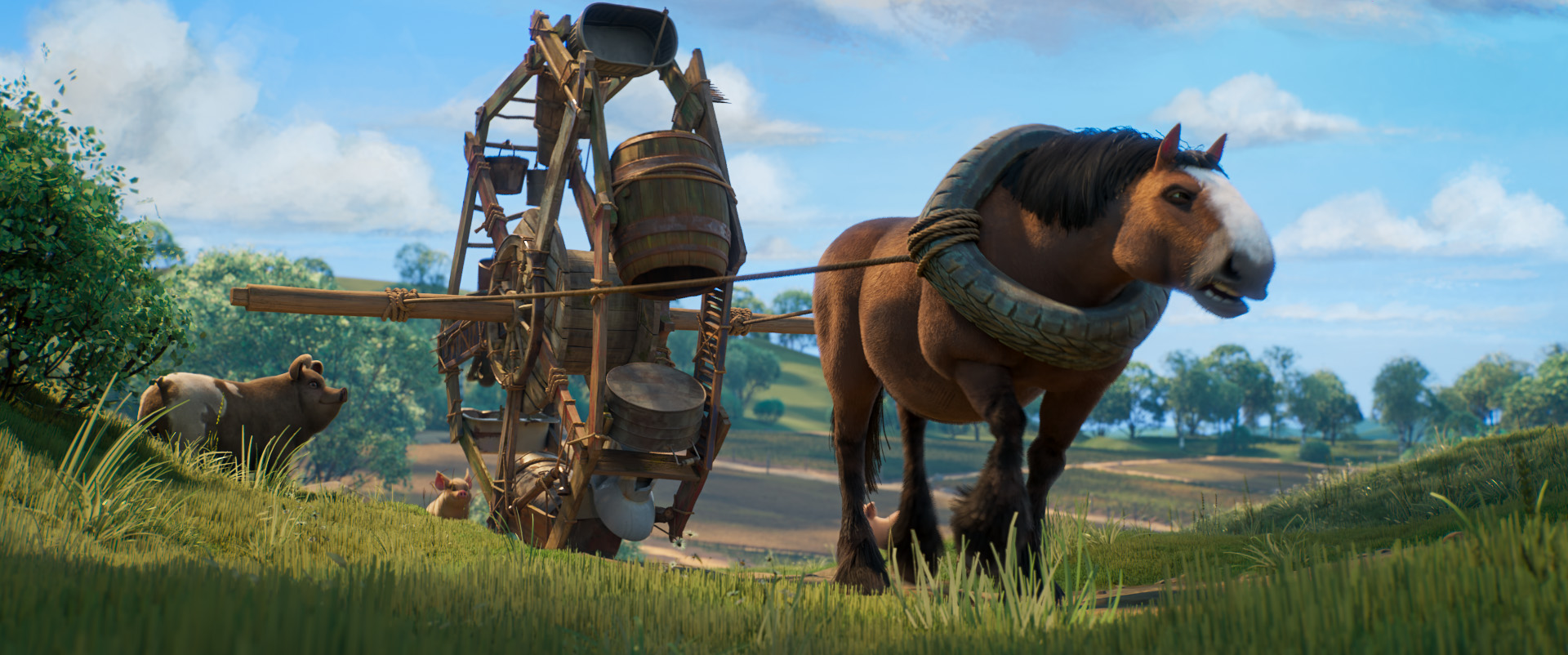
The horses were amongst the most challenging faces to animate; with long snouts it was sometimes difficult to read their mouths when speaking. Creative camera positioning means that they are usually seen in a three-quarters position in relation to the camera, avoiding facing straight on, where their mouths would be obscured.
Training sessions by Palaeontologist Stuart Sumida helped inform the rigging team’s decisions about skeletal structure, pivot points and anatomical accuracy. The animation team also visited a Montreal farm to see pigs, cows and other animals in person, studying their natural movements for reference.
One of the greatest challenges lay in having the pigs transition to walking on two legs. Lead character modeller Tanya Lyon says,
“There aren’t references for pigs walking like that, so we needed to figure out a solution which seemed natural, without compromising the fundamental principles of their anatomy. One of the team found a video of a bear walking on its hind legs, which was interesting, but from a modeller’s perspective it seemed almost to be breaking its rig!
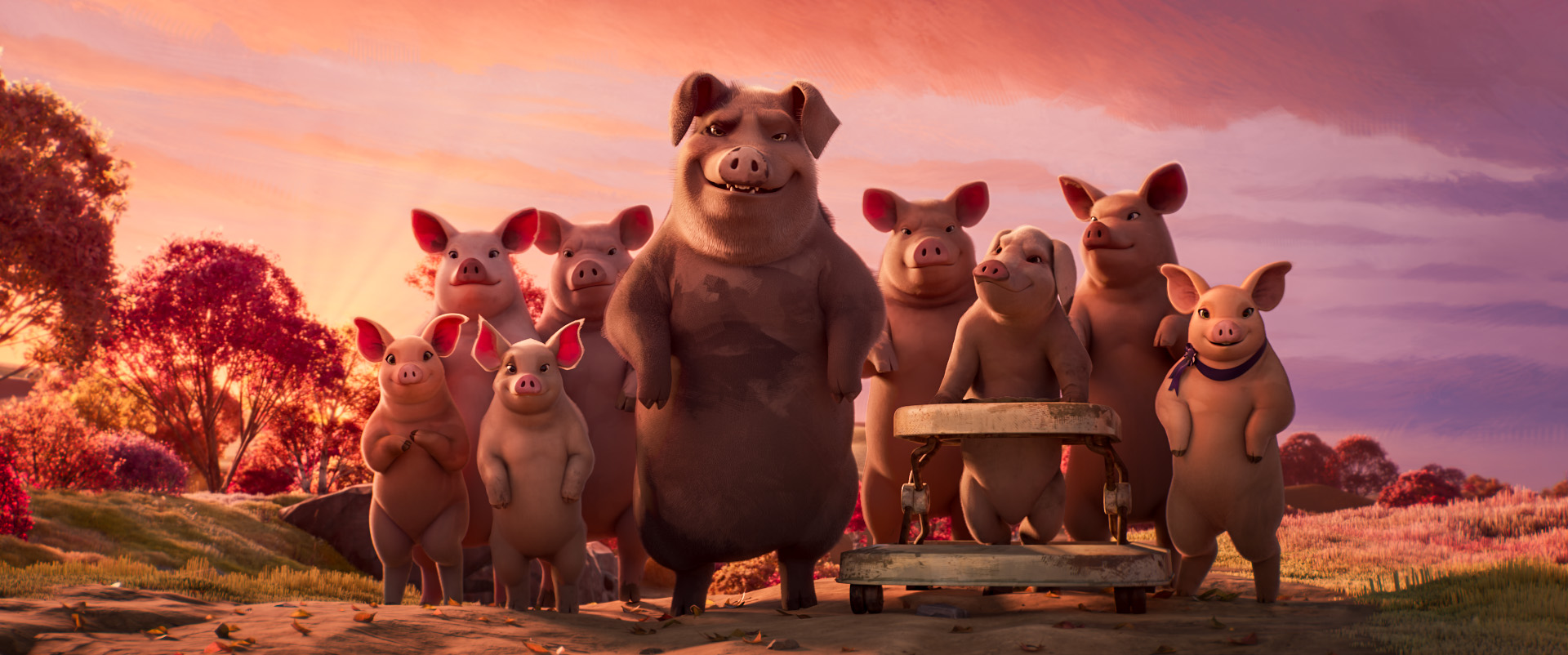
We were careful not to push it too far, keeping the pigs’ shoulders forward in a more natural quadruped position, even though they’re upright. Unlike most bipedal animals in movies, ours walk on their hooves, not their heels like a reverse elbow or knee, which would have made them look more human, but we were always pushing closer towards realism.”
Marvelous Designer was used to create clothing for both humans and pigs. Patterns for the animal clothing needed to be precisely modified for fit. Modellers avoided bulkiness in the chest area and created a clean, fitted look, tailored to each animal. Retrofitting tools in Marvelous Designer allowed the team to transfer designs from one character to another; whilst requiring some adjustment, this made a great starting point.
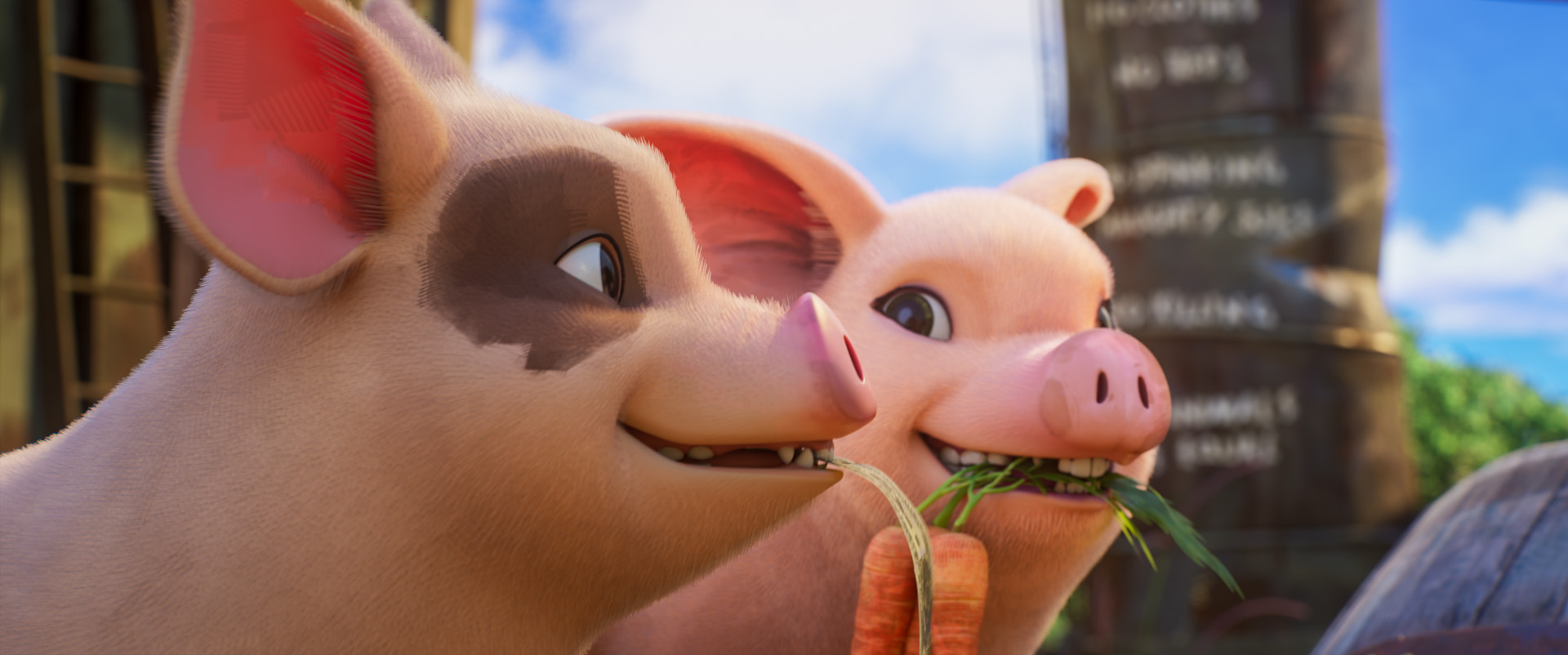
Shaders were developed which gave textures a handcrafted feel. Even the animals’ grooming was crafted so that the fur resembles brush strokes, most noticeably on the pigs. A rake brush effect was created to allow the groomers to add the painterly effect, in keeping with the Storybook theme.
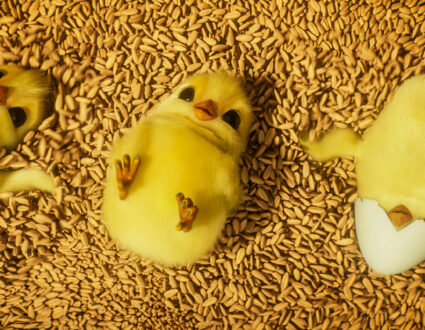
Movies featuring anthropomorphic animals face significant challenges, particularly in terms of managing scale, both with environments and assets. Animal Farm features animals as small as a chick or mouse, and as large as a horse, often sharing scenes together. Scale variations were vast, so it was important to compose shot layouts very carefully to ensure that the smallest creatures were not lost.
A phone which might look realistic in a large character’s hand might look more like a television in the hands of a smaller character. Other examples of scale consideration lay in the farmhouse. A building intended for human habitation, it needed a staircase which might feasibly accommodate the legs of a pig in terms of stair height. Similarly, the chair which Napoleon sits in needed to work with his physical limitations whilst being believable as a human chair. A careful balance always needed to be struck.
For every sequence, Cinesite worked with Director Andy Serkis to determine the emotion and message he wanted to convey, and how camera techniques might support that on a scene-by-scene basis. Camera positioning was often an important factor.
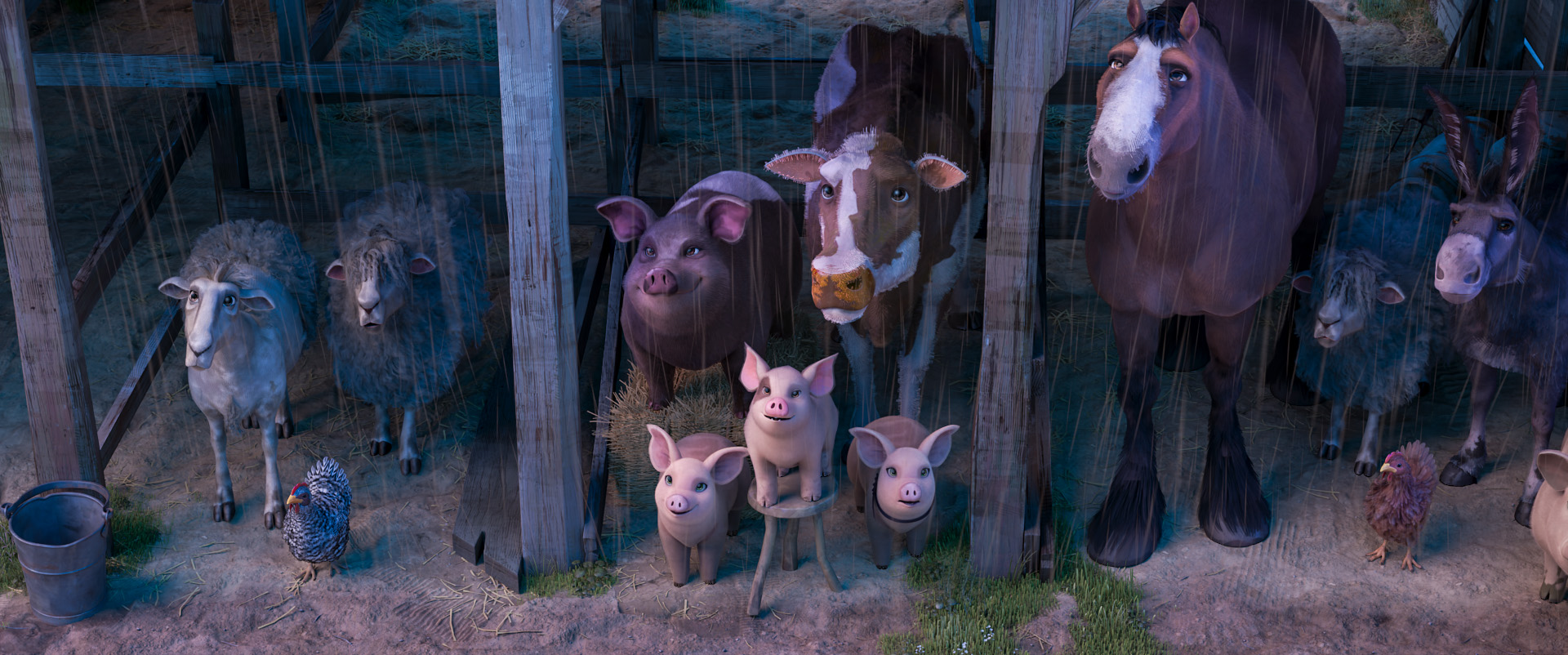
Olaf Skjenna, Director of Photography for Layout says, “Camera height relative to the characters carries meaning throughout the film. High angles suggest domination, while low angles suggest submission. We carefully determined the best angle for every shot.”
This approach, where every camera angle, expression, colour, asset and texture was rigorously examined together, ensured that every aspect of Cinesite’s work adhered with Serkis’ overall creative aim.
Serkis recounts, “I remember seeing one of the first fully lit and rendered shots textured, with everything pretty much as it would look in the movie, for the first time. When I first saw that shot, it was literally heartbreakingly brilliant. In that moment, you realise that all those decisions, those micro decisions, were beginning to pay off.”
Central to the success of Animal Farm was Andy Serkis’ clear and consistent vision, which guided the entire production process. Cinesite’s shared understanding of that creative direction, combined with the artistry and technical skill of everyone involved, played a crucial role in shaping the film’s unique style and emotional impact. The result is a testament to the strong collaboration between director and artists, demonstrating how clear communication and mutual respect can lead to an outstanding creative achievement.
Serkis concludes, “I’ve come out the other end thinking, wow, I will absolutely make another animated movie in the future. I really did hugely enjoy the process.”