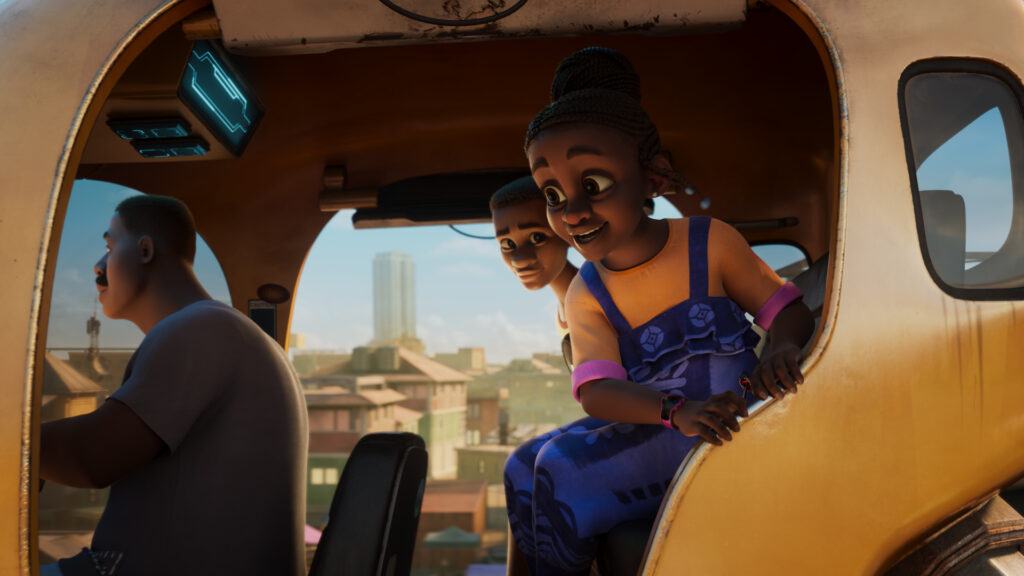
From the Smurf universe to the real-world beyond, Cinesite’s visual effects and animation teams in Montreal and Vancouver brought the lovable and iconic blue characters to life in their latest adventure.
When Papa Smurf is mysteriously taken by evil wizards Gargamel and his brother Razamel, Smurfette leads the Smurfs on a mission into the real world to save him. With the help of new friends, the Smurfs must discover what defines their destiny to save the universe.
Design
Inspiration was taken from Peyo’s original line drawings and design and stylistic choices were driven by the overall aim of maintaining the essence of his work. Cinesite’s team worked closely with Paramount production designer Max Boas and art director Margaret Wheeler, in a collaborative development process. Head of Characters Ramiro Gomez says, “There was a lot of back and forth. We would create something, show it to the client, they would do draw-overs and really help drive home the style that they were after, so throughout, it was an incredibly collaborative process.”
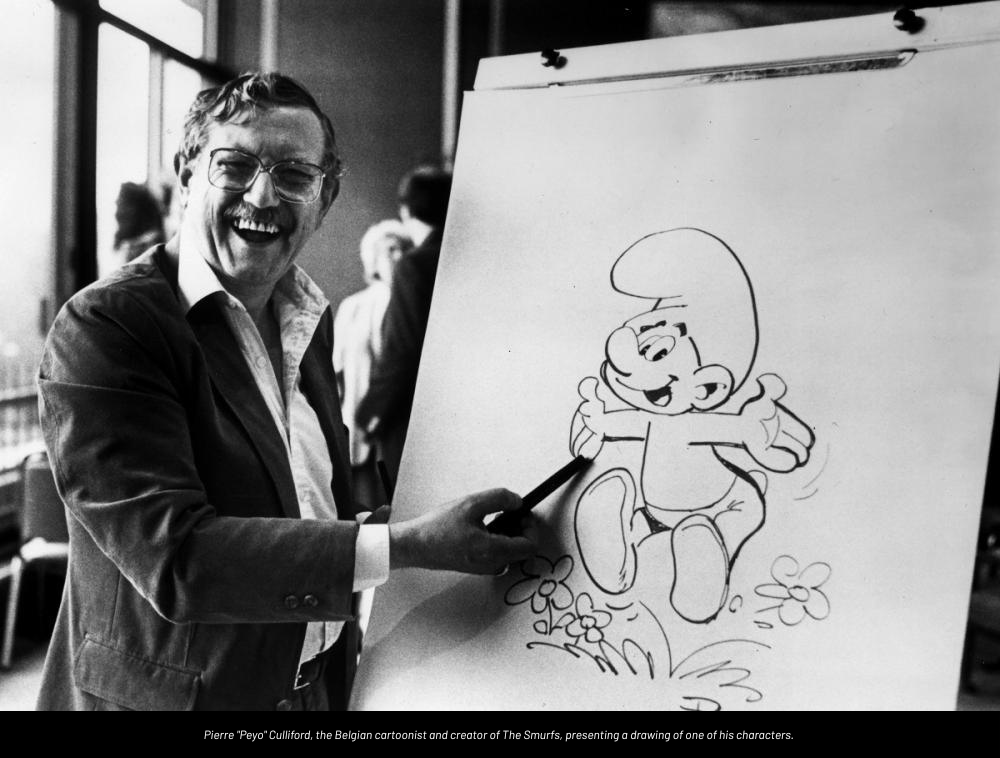
Examples of Peyo’s stylistic influence can be seen throughout the film’s design, from distinctive tufts of grass to hand-painted shadows, facial expressions and showing the characters from signature angles. Everything was created with Peyo in mind and ultimately sent to his family for approval.
Bringing the Smurfs to life
Audiences all over the world are familiar with how Smurfs look, with every character based around the same colour, shape and geometry. With this shared underlying structure, it was essential to infuse each Smurf with its own distinctive personality. In addition, the scale and proportion of the Smurfs needed to be carefully managed. With large heads, hands and feet, but small bodies and arms, there were challenges in terms of character posing and movement. The movie’s dance sequences were choreographed in LA and filmed from front and side angles, for the animators to reference and re-create. It was necessary to adapt the Smurf versions of the performances to allow for the limitations of their anatomy. For example, without shoulders, it was not possible for them to raise their arms straight up. Other movements, like limb straightening and key silhouettes or poses were emphasised to add impact in the dances.
Creating the small, squishy Smurfs required careful rigging, modelling and surfacing, and it was often necessary to sculpt elements of their geometry even after animation had been completed. One of the most distinctive aspects of the Smurf look is their facial performances. Peyo’s original drawings showed their mouths on one side of their faces, so a facial rigging system needed to be created, controllable by the animator, which allowed for three mouth variations; one to the left, one centred and one on the right. As the Smurfs turn their heads, the mouth flips seamlessly from one side of the face to the other without breaking the 3D shape.
In sequences featuring multiple Smurfs and multiple face versions to switch between, the process could have become complex and render heavy, so the efficient system created by Cinesite’s rigging team was integral to the show’s successful delivery.
Further inspiration was taken from Peyo’s drawings in terms of line work, and Cinesite’s existing curve generation tool was adapted for this specific use. Rather than simply adding basic outlines to the characters, rules were developed. If light was hitting a Smurf at a certain angle, the line wouldn’t be visible unless in shadow. Rather than only using black or grey, the outline would sample the surface colour beneath, whether blue skin, or clothing colour, an approach which gave a more refined and dynamic look. Since the original comics are hand-drawn, with varying line thickness, it was necessary to simulate brush strokes and texture to match.
Bringing Smurfette to life, one of the film’s central characters, presented one of the greatest challenges. In addition to the mouth versioning, Smurfette’s hair, her most impressive feature, needed its own versions according to her position and movement. Built out of a volume, a bespoke grooming process needed to be developed which also felt fluid and believable. Simulation was tricky and continuity between shots challenging; Smurfette’s hair needed to look great from every angle.
Paramount production designers Max and Margaret worked closely with Cinesite’s team to find a solution which added life and movement in a manageable way. The approval process for Smurfette’s hair included Paramount, the Peyo team and even Rihanna herself (who voiced Smurfette). Ultimately, Smurfette’s hair hits poses, but still move s and interacts with her body, falling across her cheek or behind her shoulders in a way which is a careful balance between realism and signature style.
Into the Real world
While the Smurfs start out their story in their own, magical world, in their quest to find missing Papa Smurf they travel from that dimension into the real world, ending up in locations including France, Germany and Australia. Cinesite’s visual effects team created 256 shots, or 15 minutes of the movie, which integrate the Smurfs into these real world settings, some of which were captured through traditional plate photography, with others fully computer generated. The VFX work was overseen by Cinesite VFX supervisor Suzie Askham.
The Smurfs’ entry into the real world begins with them falling out of a drainpipe onto a Paris pavement.
Filming took place in Turin and Rome, Italy, locations which served as stand-ins for Paris and Germany. With few actors appearing in shots, and our diminutive heroes (who would be added later) only about 6 inches tall, it was crucial to align the crew’s understanding and the director’s vision for every scene. To this end, small 3D printed Smurf figures were captured as reference within each environment, which were also a useful lighting and scale reference.
CG supervisor Gee Tatchell says, “We started with a full visual effects previsualisation process, where we scanned locations or built environments using Google Maps, so we could block out shots before shooting took place. This formed a reference for the DOP during filming and was particularly useful in terms of planning around the Smurfs’ scale.” The camera needed to be very low, to capture the world from the Smurfs’ perspective, so special skater scope camera lenses were used. Objects and features close to the camera needed to be hyper-detailed to create a believable sense of perspective.
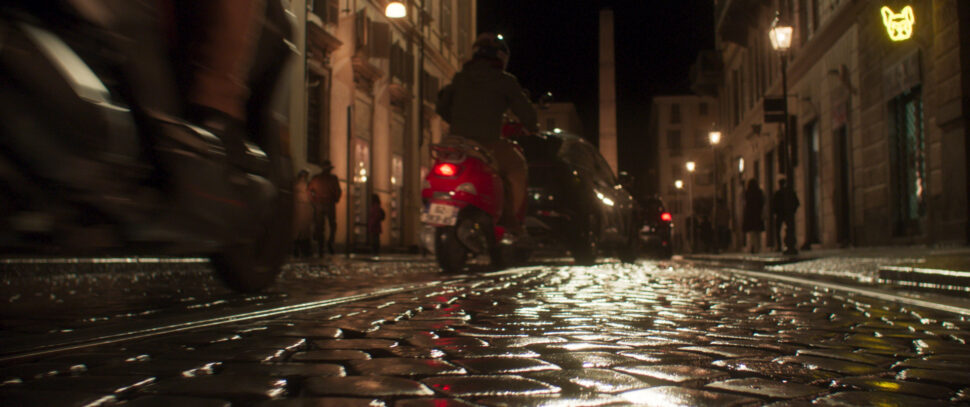
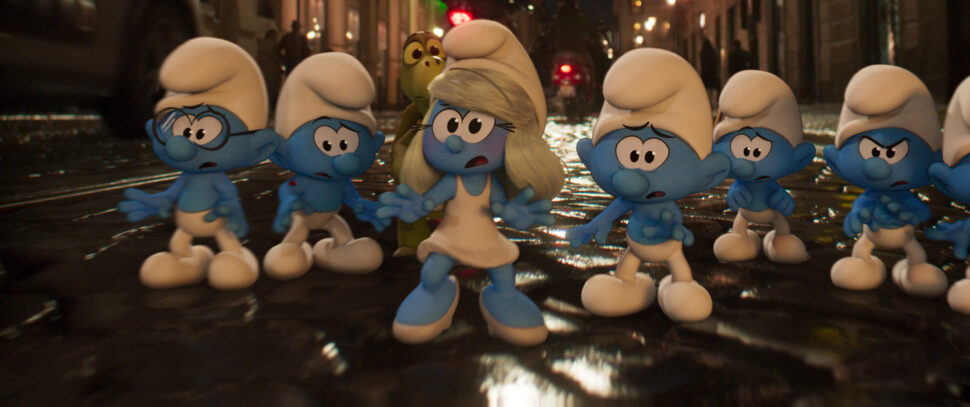
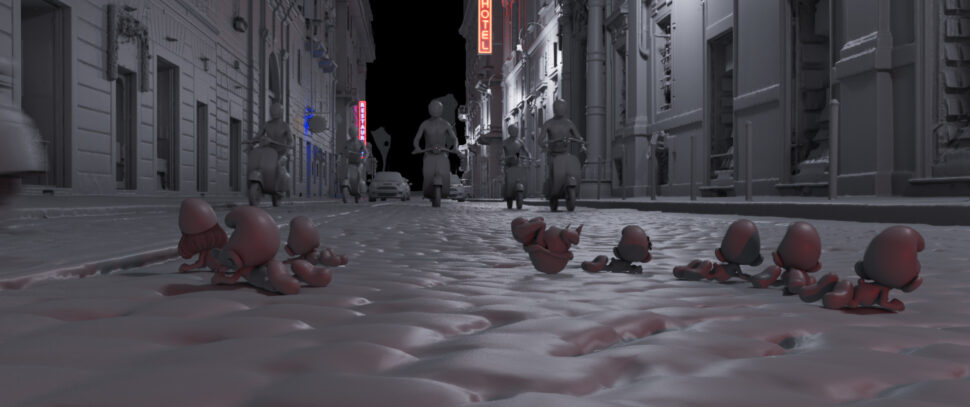
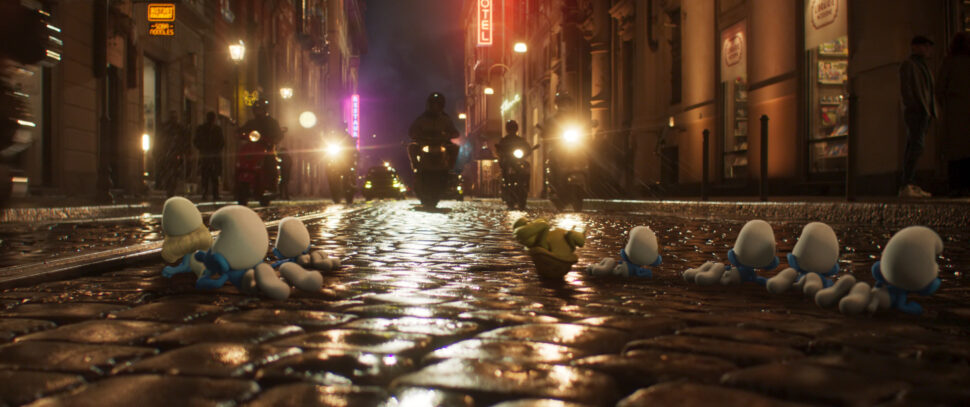

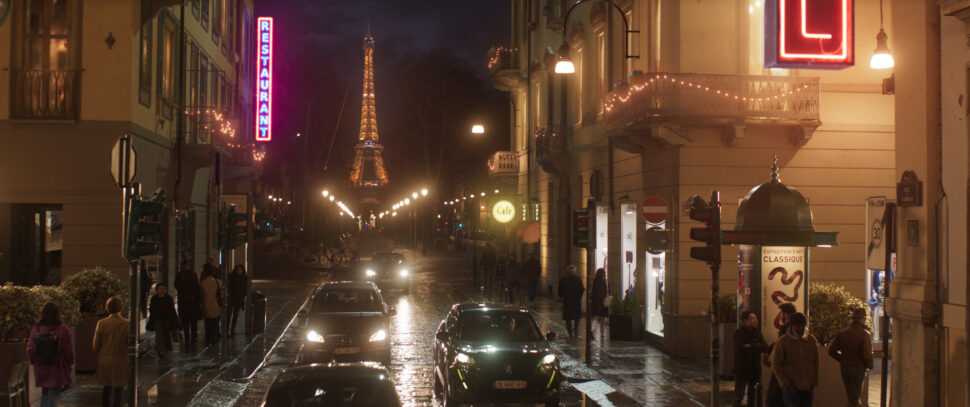
Establishing how the Smurfs would interact with light and shadow in the real world, while preserving their distinctive appearance, was important to create convincing integration. Unlike in the Smurfs’ world, light is absorbed and reflected differently and motion blur was used. Lighting was a key feature in a later sequence where the Smurfs seek out Papa’s brother Ken in a busy nightclub, in their quest to find clues to their leader’s whereabouts. Flashing disco lights, multiple coloured light sources, needed to be recreated using animated lighting setups, but with a careful balance to ensure that while the Smurfs feel connected with the space, they never lose their signature blue-ness.
Transported again via the magic portal, Smurfette and Noname arrive in Australia, emerging from a Joey’s pouch, where they meet up with the hilarious Mama Poot, leader of the Snooterpoots – fuzzy, mischievous creatures with a sweet tooth. Having borrowed a buggy from Mama Poot, the two Smurfs embark on a terrifying joy-ride through the Outback.
The Australian location was rebuilt entirely in CG by the visual effects team, as were the kangaroos. For one section, a location called Devil’s Marbles was recreated, a collection of large, red, granite boulders in the Northern Territory. A technical shoot took place on location, gathering scans and reference materials for the texture, lighting, sky and environments, whilst respecting the cultural significance of the location for the indigenous population. The buggy sequence required the recreation of a 2.5km Outback environment, complete with dust kicked up from the vehicle’s wheels.
It Takes a Village…
Cinesite’s expertise in animation, visual effects and previous work on hybrid productions positioned us perfectly for this movie. It took a Smurf village to finish it – our animation and VFX teams collaborated and shared expertise in working out solutions throughout the real-world sequences, adapting to each other’s needs and streamlining processes.